Bongsu Park - Fiori della Memoria - Museum MARV Gradara
Bongsu Park
Fiori della Memoria
Curated by Riccardo Freddo and Luca Baroni
Rosenfeld Gallery for MARV | Museo d’Arte Rubini Vesin
Smell, touch, sight: from 6 June to 5 July, the MARV | Museo d’Arte Rubini Vesin in Gradara presents a multisensory exhibition by Korean artist Bongsu Park, whose works transform flowers and plants into images, fragrances, and traces to be seen, touched, and inhaled.
There is a Korean word that evokes a layered sensory perception, bringing together two seemingly distant dimensions: resonance, understood as echo, and the lingering persistence of scent. That word is janhyang. From this concept emerges Flowers of Memory, the exhibition by Korean artist Bongsu Park, presented in Italy at the MARV | Museo d’Arte Rubini Vesin in Gradara, in the Marche region, from 6 June to 5 July, curated by Riccardo Freddo and Luca Baroni in collaboration with Rosenfeld Gallery.
Conceived as a deeply immersive sensory experience, the exhibition takes janhyang as both its conceptual and material point of departure, rooted in the very nature of Park’s artistic process: slow, organic, and shaped over time.
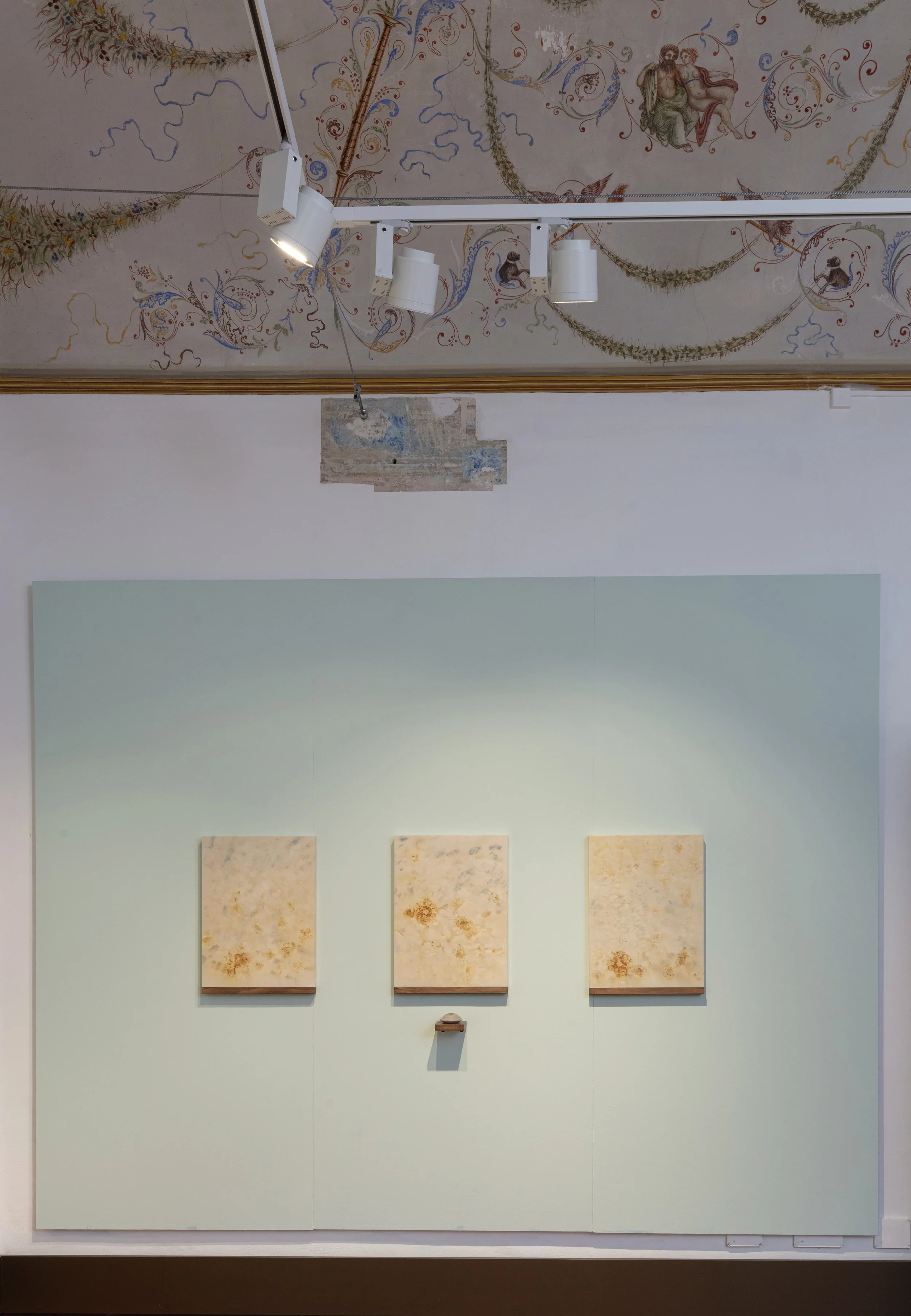
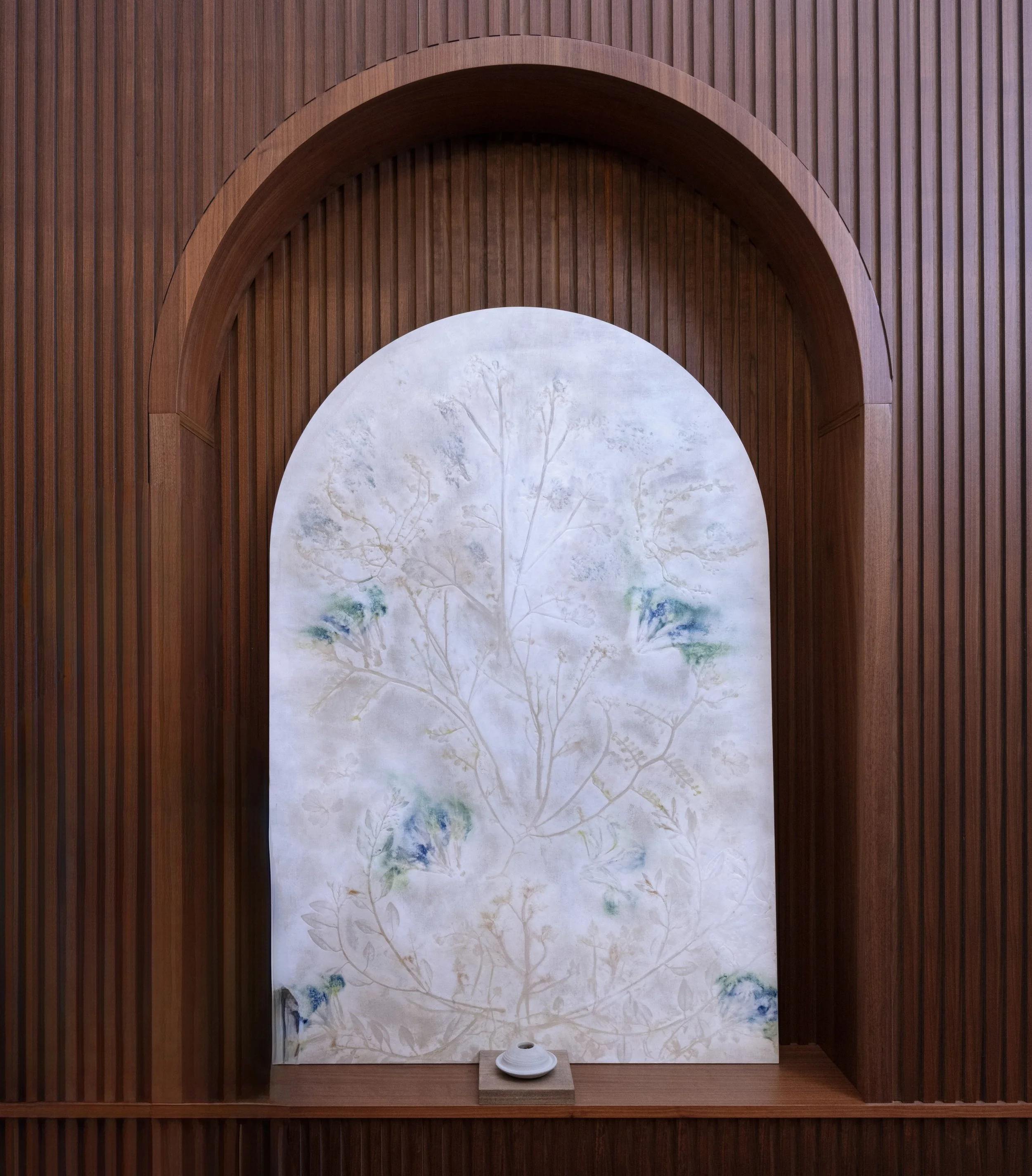
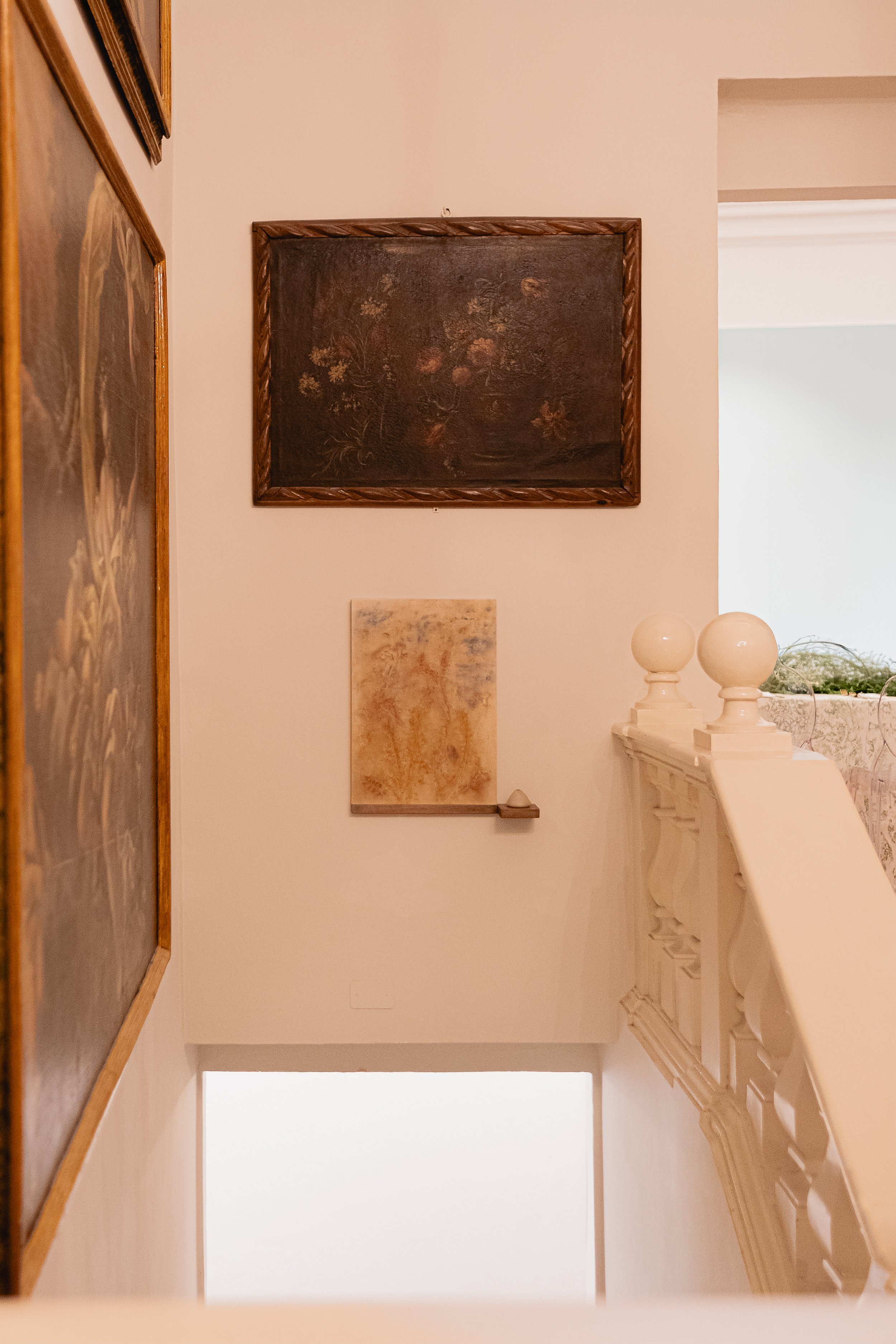
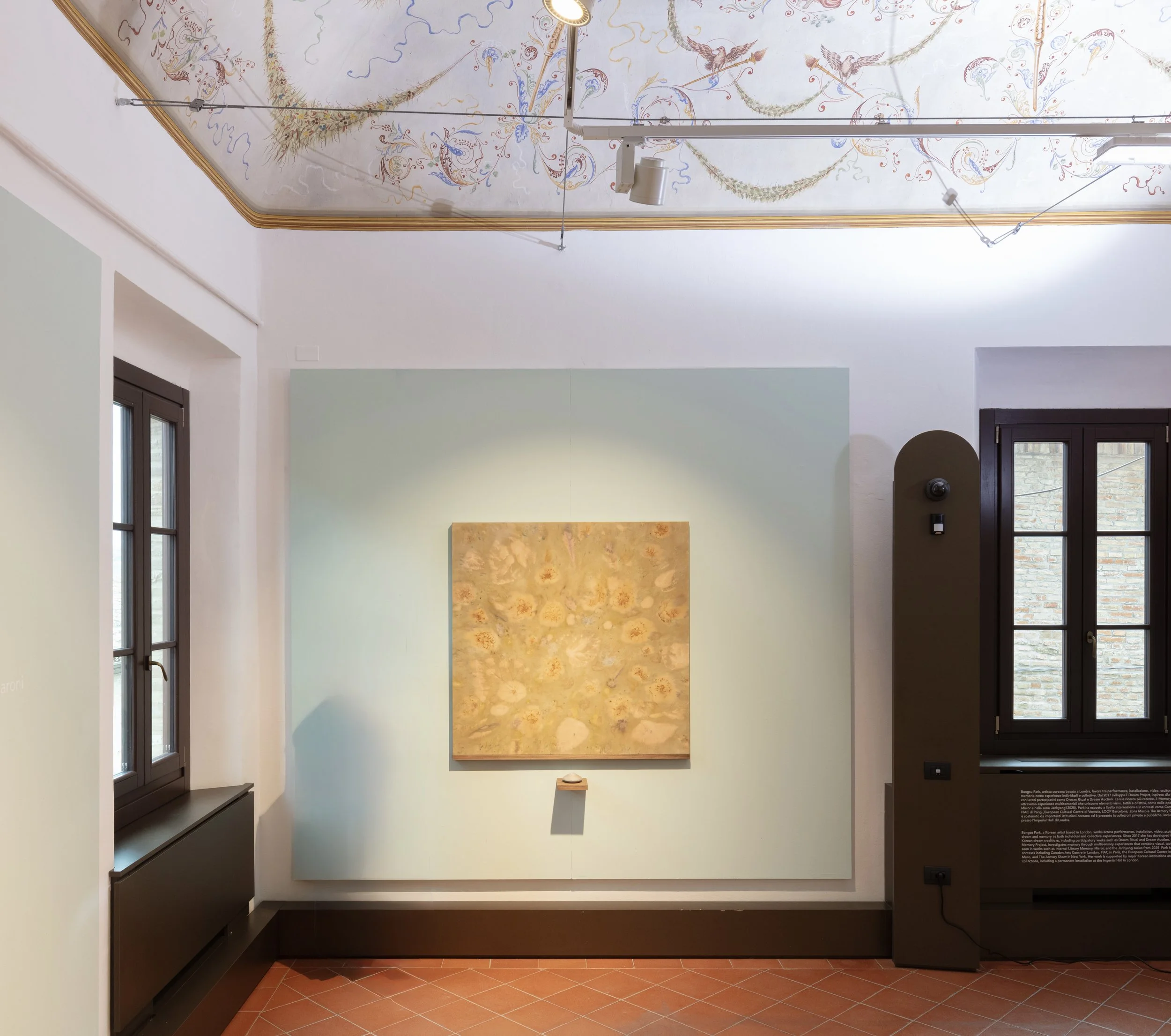
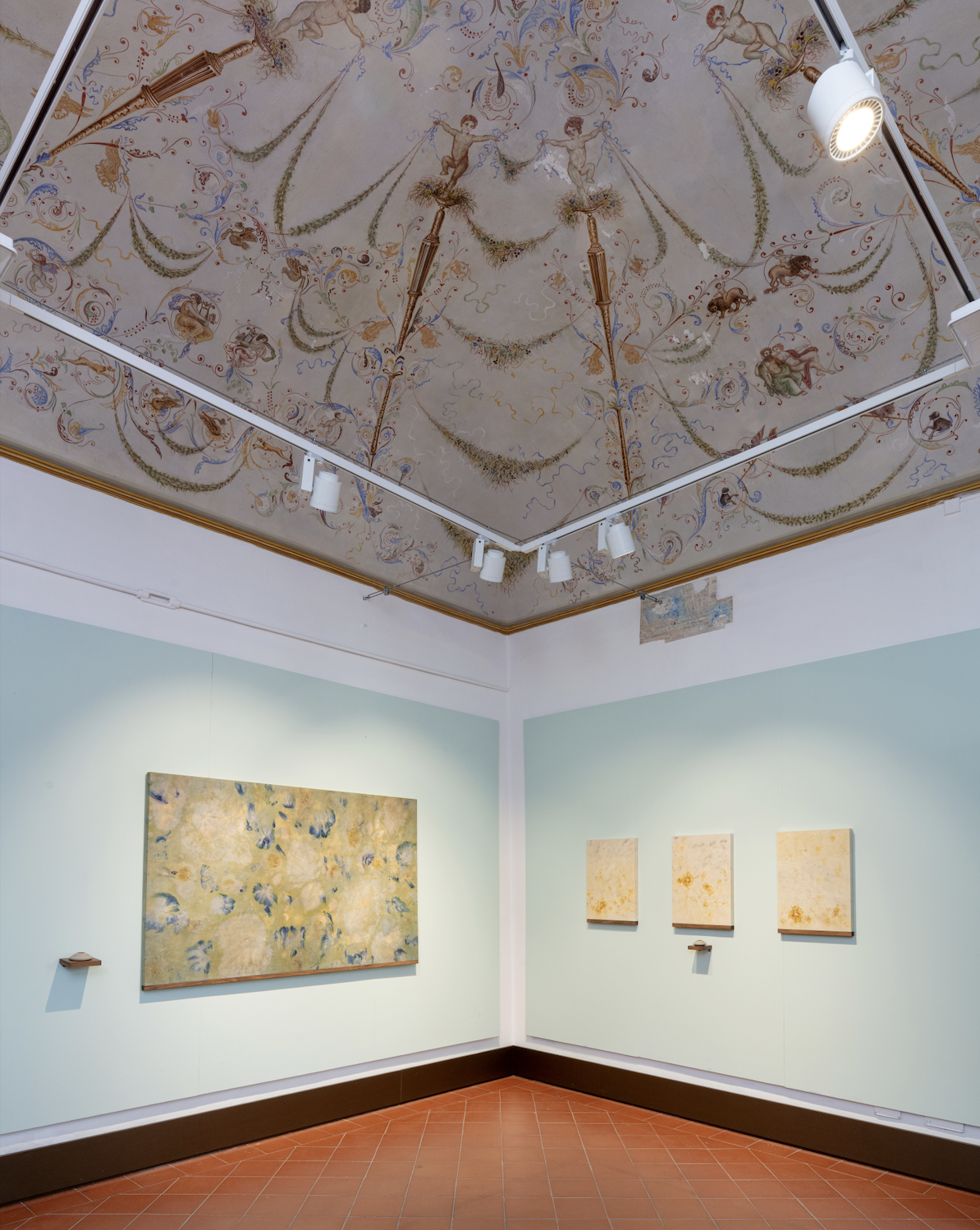
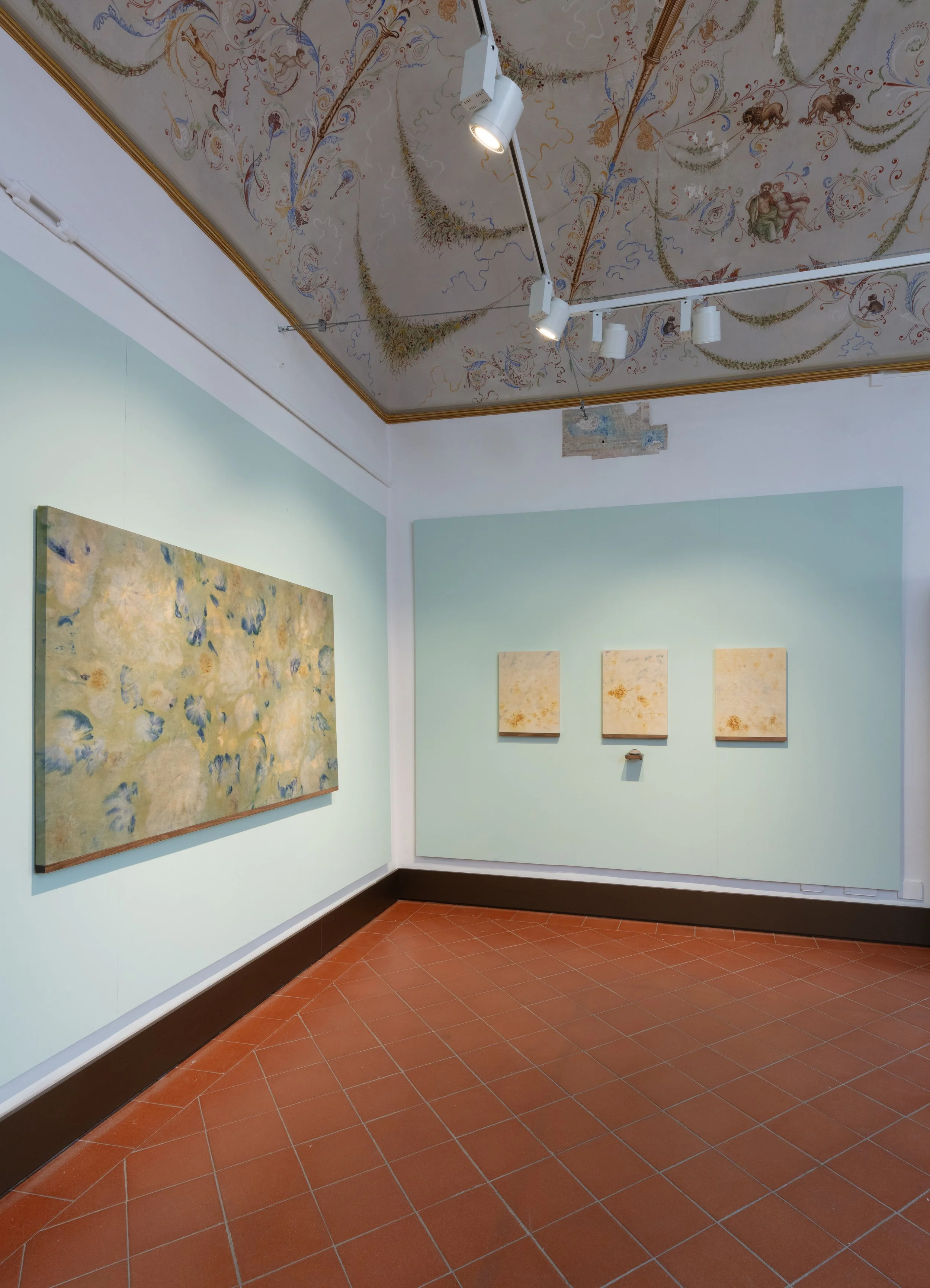
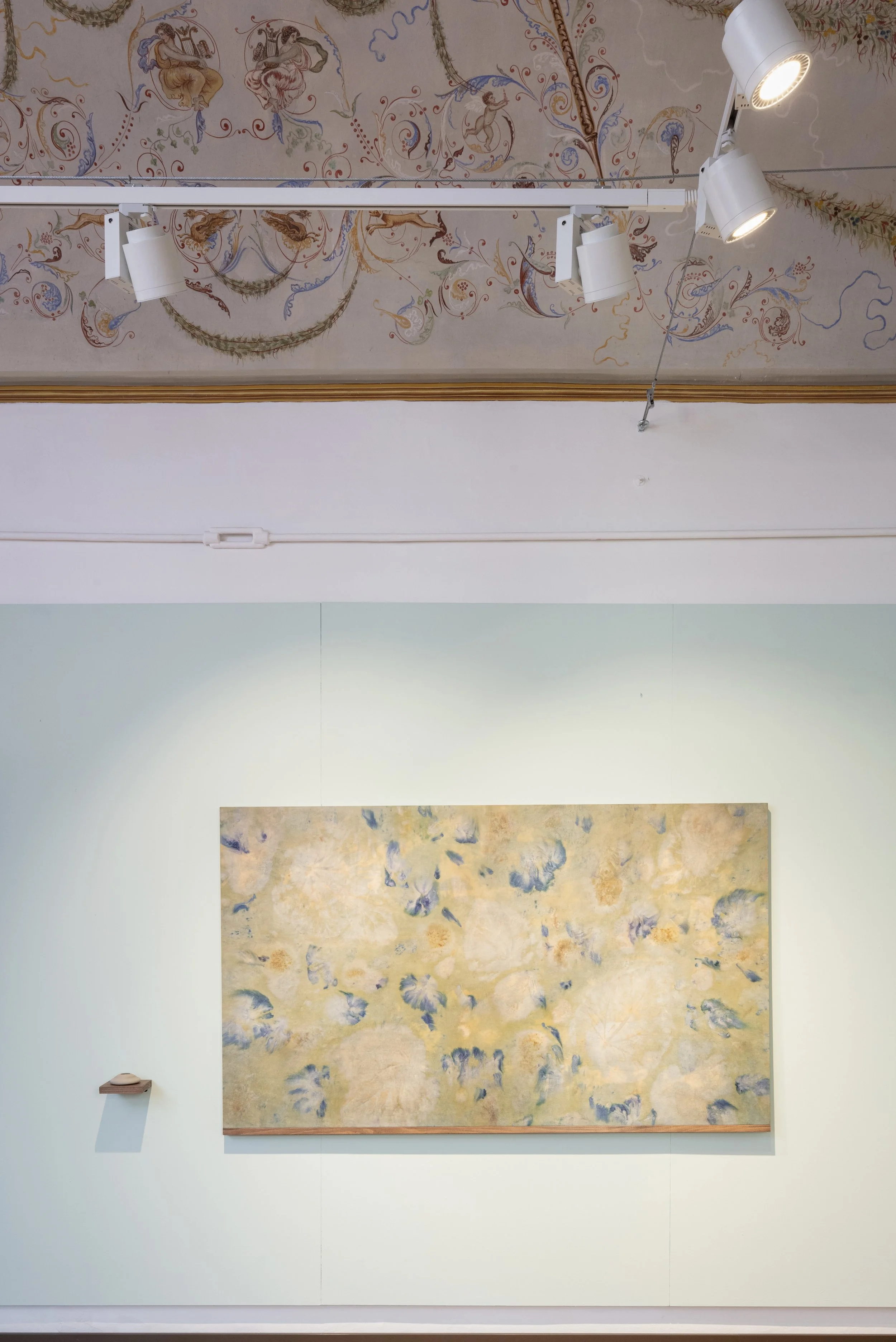
Park’s practice begins with a primordial gesture — planting — which gradually evolves into a complex and profoundly tactile artistic methodology. Plants are gathered, pressed directly onto canvas, and left for months to release their natural pigments through prolonged contact, producing images that are not represented but physically impressed into the surface itself. Once dried, the same vegetal materials are transformed again: preserved within ceramic vessels crafted by the artist and later distilled to extract their scent. It is a process of continual transformation, in which matter becomes trace, presence, and memory — a process that ultimately turns material into art.
From this singular approach emerge multisensory works capable of activating smell, touch, and sight simultaneously — fragrance, matter, and image converging into one perceptual experience. Memory here is not presented as something fixed or distant, but as something living, unstable, and shared: not merely to be observed, but to be felt.
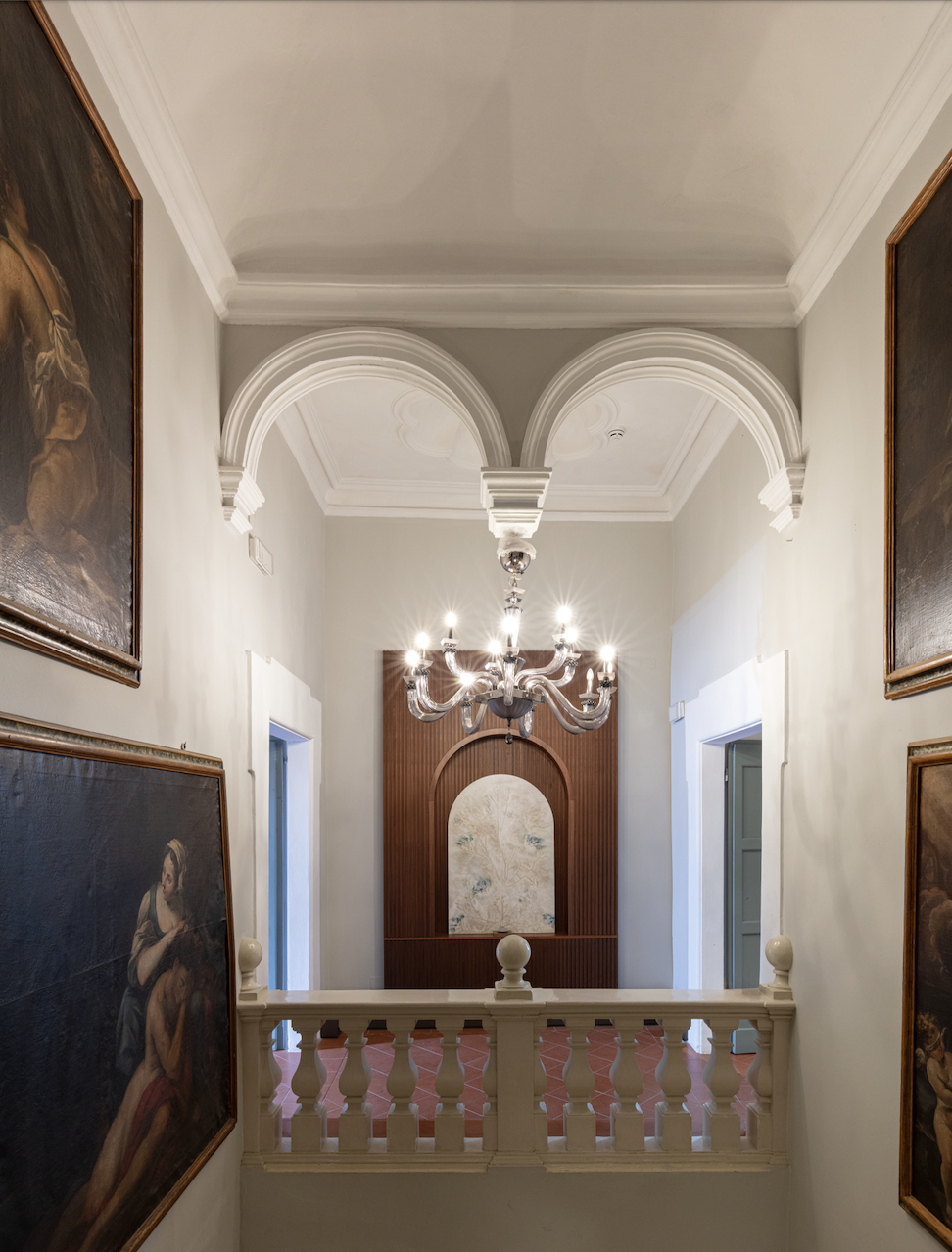
This perceptual journey unfolds throughout the exhibition Flowers of Memory, which arrives at the MARV spaces in Gradara as a gradual immersion into this sensory dimension.
The opening galleries present Park’s most recent works, particularly those from the Janhyang series (2025), where painting, botanical matter, and olfactory composition merge into a single sensitive organism. In these works, memory manifests both as image and physical trace, but also as a latent experience activated through the act of viewing itself. Audiences are often invited to participate directly in perceptual rituals that transform individual experience into a shared field of encounter.
“Flowers of Memory is not simply an exhibition of artworks, but an environment of perceptual transformation. It is an invitation to dwell within the slow temporality of matter, to listen to what remains, and to recognize how every memory — even the most intimate — is always already shared,” explains curator Riccardo Freddo.
The final gallery introduces a retrospective dimension dedicated to the artist’s performances. Through video documentation of works such as Mirror (2024), Dream Wave (2020), and Internal Library – Memory (2017), visitors encounter the continuity of Park’s research: from the collective and social dimensions of dreaming to the more intimate and multisensory exploration of memory.
“The Marche region is a place of extraordinary beauty, rich in scents, colors, and nature. During the Middle Ages and the Renaissance, this territory was one of the principal centers for the production of woad, the plant-based pigment used to create green-blue hues in textiles and paper. To reflect on these histories today and reinterpret them through Bongsu Park’s contemporary practice means, for us, reaffirming a tradition that has lived in this region for centuries,” says Luca Baroni, Director of MARV and the Marche Nord Museum Network.
The exhibition forms part of Gradara Contemporanea, the international contemporary art program now entering its sixth edition in 2026. Each June, the medieval town of Gradara becomes a meeting point for some of the most compelling voices in contemporary art, both Italian and international.
Organized by the Associazione Gradara Contemporanea in collaboration with the MARV Museum, the Marche Nord Museum Network, and Augeo Art Space, this year’s edition introduces two significant new initiatives: a commitment to gender parity in the selection of artists and the ambition to become an incubator for emerging curatorial voices under the age of twenty-five. Four young invited curators are participating in the project: Elisabetta Lotti, Lucrezia Mannucci, Chiara Tonti, and Tommaso Vincenzi.
Born in Busan, South Korea, Bongsu Park lives and works in London. Her multidisciplinary practice spans performance, installation, video, sculpture, painting, and participatory formats. Park’s work explores the intangible dimensions of dreams and memory, investigating how interior experiences resonate across both individual and collective consciousness. Since 2017, she has developed the Dream Project, inspired by Korean dream culture and traditions of dream exchange, through works including Dream Ritual (2019, The Coronet Theatre, London), Dreamers’ Gathering, and Dream Auction(2021, Seoul). Her more recent research, gathered under the umbrella of the Memory Project, focuses on memory as a shared sensory experience through works such as Internal Library – Memory (2017), Mirror (2024), and the Janhyangseries (2025), in which visual, tactile, and olfactory elements intertwine. Park has exhibited and performed internationally at institutions and platforms including Camden Arts Centre, FIAC, European Cultural Centre, LOOP Barcelona, Zona Maco, and The Armory Show. Her work has been supported by major institutions including Arts Council Korea and Seoul Foundation for Arts and Culture, and is held in numerous private and public collections, including a permanent installation at Imperial Hall in London.
Full Press Review
